Greater NYC for Change Annual Membership Meeting

Bookmark and Share
Greater NYC for Change Annual Membership meeting

Greater NYC for Change Annual Membership meeting

Our board has been ratified! Here is to a great year.

Over the last few years, Greater NYC for Change had led in the fight for health care reform, gun violence prevention, and reducing the glaring income inequality in our nation. This year, we’ve taken the steps to become a nonprofit corporation, and we were honored to launch as a nonprofit on Wednesday, May 22nd. Other community leaders and progressive visionaries joined in to plan great things!  


After wine and cheese, the members voted in the slate of executive board members who will run the day to day operations of the group. Later this year, we’ll kick off a bigger party to celebrate – please stay tuned! This is a milestone for us. We hope to amplify your voice and serve worthy causes in partnership with your leadership and allies, in the cause of social justice.

Below are some of our top priorities for the year to come: 

·    Partnership with Health Care for All New York to educate and enroll eligible New Yorkers in the new health care exchange opening in January 2014 

·      Combatting voter suppression laws in Pennsylvania 

·      Advocating for reversal of the harsh federal budget cuts contained in the sequester and for maintenance of protections under Social Security, Medicare, and Medicaid 

·      Partnership with organizations dedicated to immigration reform to lobby for passage of the DREAM Act and other meaningful immigration reform legislation 

·      Working to reduce gun violence in New York City communities and to pass gun safety legislation on the national level 

·      Organizing parents, teachers, and other members of the community to lobby state policymakers to expand the pre-k budget, raise educational levels, and combat poverty 

·      LGBT initiatives not limited to overturning DOMA and ensuring recognition of Marriage Equality in all states 

·      Organizing candidate forums to encourage civic participation in local elections 

·      Advocacy against income inequality, in particular for a true living wage in New York City

Help Save Electoral Votes In Pennsylvania

Bookmark and Share
Greater NYC for Change members helped register voters in Allentown, PA in fall 2012. This is Team Barbershop, a group canvassers who worked out of a local business!

Greater NYC for Change members helped register voters in Allentown, PA in fall 2012. This is Team Barbershop, a group of canvassers who worked out of a local business.

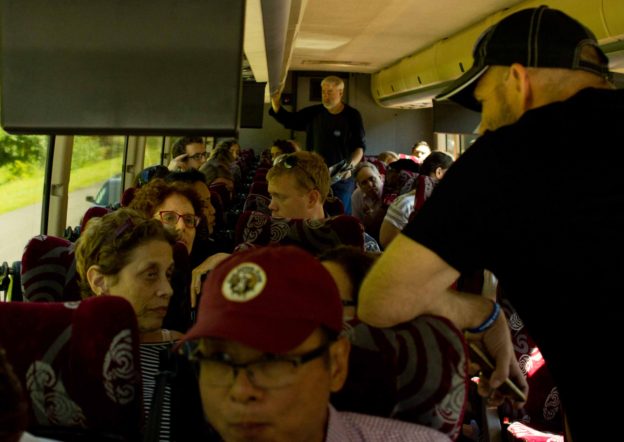
Miss talking to Pennsylvania voters? Now’s your chance! On Saturday, May 18th, join fifty New Yorkers to travel to Allentown, PA. We’ll be canvassing and attending a rally against proposed legislation to split the Electoral College votes by popular vote totals.

RSVP here

State legislators are trying to pass a bill to divide up PA’s 20 electoral votes, blunting its status as a true battleground state, and indirectly diminishing New York’s ability to affect close national races in the future. Most importantly, splitting votes in only certain states unfairly slants elections. Not dissimilar to attempts to suppress voting rights and ballot access in certain communities, this bill is unacceptable and would do tremendous harm to American democracy.

We don’t want to be caught looking away during a crucial time and find ourselves with more challenges to overcome in the next election cycle, just like we did with Photo ID in 2012.

We need every single seat on the bus this Saturday, going to Allentown, PA to be filled with eager, energetic and street-smart NYC volunteers to canvass for petition signatures and inform the local voters of the threat to their state.

Where and When: The bus will be loading in front of Babies R Us on Union Square East on Saturday, May 18, starting around 8:30 AM for a 9 AM departure. We plan to arrive around 11 AM in Allentown, join in a short rally with our friends at People for the American Way, then strike out to do some sidewalk canvassing. We plan to be back in the city by 6 PM.

RSVP here – and sign up to help!

Who do you want to be our next Mayor?

Bookmark and Share

It’s election season! Our next mayor, public advocate, and other city officials are vying for your votes. What do you want your post-Bloomberg city to look like?

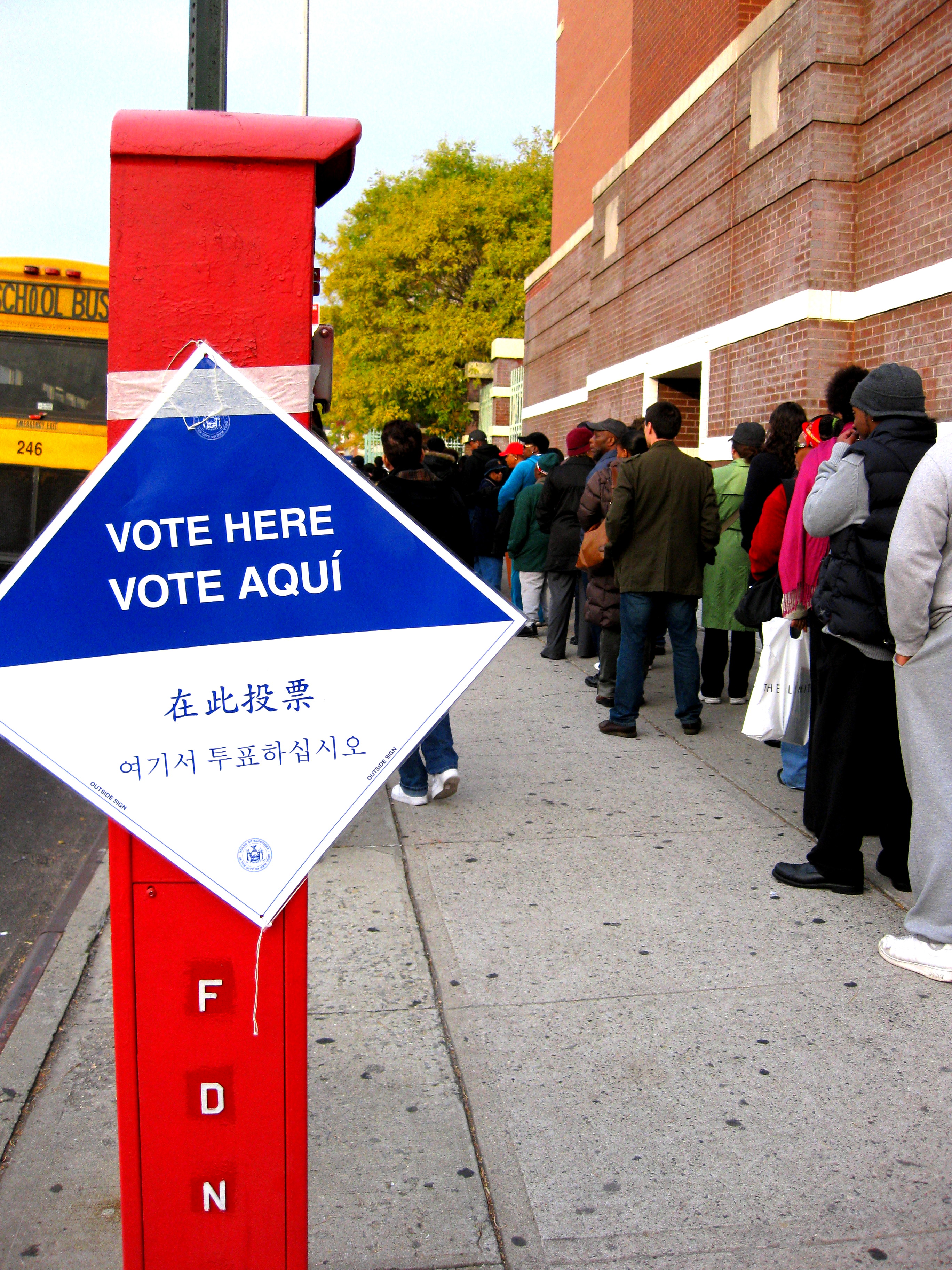
This year’s primary is September 10, and general election is November 5. Register to vote here.

Greater NYC for Change is cosponsoring three forums where you can meet the candidates. With your help, we’ll be giving each a list of questions to address in their introductions, before the audience asks theirs. Submit your questions here.

Wednesday, May 1 • 6 PM
Millenial Mayoral Forum
CUNY Graduate Center • 365 Fifth Avenue between 34th and 35th Streets. Cosponsored with Manhattan Young Democrats, Young Professional & Politically Engaged, AM 1600 WWRL, and many more
*This forum is sold out, but Greater NYC for Change has 15 tickets available. Please email Kat at katherinebrezler@gmail.com and fill out the survey. (First 15 to do both will get the tickets!)

Monday, April 29 • 7 PM
Mayoral Forum (with VID)
The LGBT Community Center • 208 West 13th Street between 7th and 8th Avenues. Cosponsored with Village Independent Democrats and many more

FREE! RSVP to: Naomi.Rothwell2@gmail.com

Tuesday, May 7 • 7 PM

Manhattan Borough President and Public Advocate Forum

The LGBT Community Center • 208 West 13th Street between 7th and 8th Avenues. Cosponsored with Village Independent Democrats and many more

FREE! RSVP to: Naomi.Rothwell2@gmail.com

Your Questions for the Candidates

Bookmark and Share

Here are some of the amazing (and hard-hitting) questions that Greater NYC for Change members want to ask the candidates for mayor, public advocate and Manhattan borough president.

Questions for the Mayoral Candidates*

*some can be asked of Public Advocate and Borough President candidates

Health care
In New York State, 2.5 million people will soon be eligible for health care coverage under the Affordable Care Act, through Medicaid expansion and exchanges. Enrollment starts Oct. 1st of this year. But those eligible are both young and uniformed: nationally, over half eligible (54%) are under the age of 34, and 78% have no idea what a health care exchange is (according to Enroll America). If elected, how do you plan to educate your constituents about enrolling? What local resources will you commit to making sure the public is aware?

Gun Violence

Do you support the policies enumerated in New York State’s recently passed NY SAFE Act, and what are the tactics as well as long-range strategies you support to reduce gun violence in New York City communities? Are there new ways to look at the old but accelerating problem of urban gun violence?

Homelessness

Forbes estimates that 40,000 people were left homeless by Sandy, adding to the 50,000 already homeless in New York City. Many of the newly homeless were renting apartments that were affordable to them but do not have that opportunity again. How do you plan to address this problem both from a housing perspective but also, specifically, how do you plan to keep track of homeless affected by this crisis to address their needs?

Transportation

Will you continue the fantastic pro-bicycling policies that Bloomberg has initiated and completed throughout the five boroughs?

What are the bike exchange program risks, cost effectiveness, and impact on the city?

Term Limits

In what way did you show respect for the will of the electorate as it related to term limits and why?

Education/Libraries

What should individuals who own private schools in NYC that provide high quality education do when there is an overwhelming phenomenon of charter schools throughout the boroughs forcing private schools to close their doors? Will there be a ceiling or cap on how many more will open?

What do you plan to do about city waste & corruption in the public library systems?

Sandy recovery

The billions in federal aid, administered by Habitat for Humanity International here in New York, are primarily directed at home owners, not renters. There is one program open to renters (and therefore the undocumented), from the American Red Cross, but it is underfunded. How do you propose to meet the needs of renters and the undocumented?

What are you going to do to insure Community Development Block Grant funds get to community based non-profit recovery organizations and are used towards long term recovery – and not simply distributed via a recovery authority or through appointed staff at City Hall?

Would you be willing to allocate HMGP (Hazard Mitigation Grant Program) to make a meaningful and sustainable difference to the lives of individual residents? Governments typically use those funds for infrastructure – but some states, like Florida, allocate a portion of those funds to mitigate impact on homeowners and community-based non-profits.

In the future, how do we avoid the Mayor setting-up a recovery fund that cuts off non-profits from their donors and distributes through a closed process managed by government employees with little or no experience in disaster recovery? What can be done to fund the work of community and faith-based non-profit organizations in times of crisis?

Lightening question/ yes or no: After Hurricane Sandy hit, on October 31, 2012, Mayor Bloomberg refused help from the National Guard to assist our brave — but overwhelmed — first responders. If you were in the same position, would you have refused help from the National Guard? [Follow up question: what is one specific thing you would have differently from Mayor Bloomberg to respond to Hurricane Sandy in the first week of the crisis?]


Economy

Mayor Bloomberg, like Giuliani and Koch before him, has maintained that continued granting of tax breaks to large corporations is essential if we are to avoid the migration of such businesses from New York to other states and regions. At the same time, we’ve faced cutbacks in various social services amid the very slow and lopsided economic recovery–and the sequester cuts will only increase pressures to reduce costs. What are the implications of these trends for middle class people in New York and what, if anything, do you propose to do differently?


Questions for the Public Advocate

What would you do to make the Public Advocate’s office a budget line item instead of being subject to political whim?

What plans to do have for outreach work, funding, and support for LGBTQ youth experiencing homelessness in NYC?

In light of the Boston Marathon tragedy, how are you going to approach the difficult challenge of “no profiling” and at the same time keeping the public safe?

What will you do to increase the relevance of this vestigial office?


Questions for the Manhattan Borough President

What are your plans for mass transit, like light rail, and enforcing zoning to prevent proliferation of sunlight- and sky-killing skyscrapers?

How would you address the displacement of poor and working class New Yorkers from living in Manhattan?

How are you going to address the difficult problem of union member public employee logging in higher-than-usual hours in the final years of their employ, to bump up their pension payments?

How do you suggest we encourage youth of NYC to take interest in your role?

Rally Against Gun Violence

Bookmark and Share

Wednesday was a bad day — no doubt about it. Not only a vocal minority of the gun lobby, but also an entrenched, well-funded minority of the US Senate, succeeded in frustrating the will of more than 90% of the American people. We’ll all have much to say about this later, as we ponder how to move legislation forward and move bad legislators out of office. In the meantime, here are things you CAN do now:

1. Come out in force this Saturday, April 20th at NOON as NYC for Action, NYAGV and other gun safety groups join together to thank New York Senators Gillibrand and Schumer for their hard, dedicated work, and pledge to work to make gun safety in America happen.
Sign up here.
2. Many people are calling senators who voted “Yes” on background checks to show their appreciation (The senators who voted to support a ban on assault weapons and limits on large-capacity magazines are truly golden.) A good suggestion is that you tweet your displeasure and disgust at all those senators, Democrats included, who voted “No.” Twitter handles are below. Please share widely to step up the pressure.
For reference: an excellent editorial and a moving expression of outrage by Gabby Giffords, from the New York Times.
TWITTER HANDLES OF THOSE WHO VOTED NO*
*Except Majority Leader Harry Reid, whose vote was on procedural grounds
  • Sen. Lamar Alexander (R-Tenn.) — @SenAlexander
  • Sen. Kelly Ayotte (R-N.H.) — @KellyAyotte
  • Sen. John Barrasso (R-Wyo.) — @SenJohnBarrasso
  • Sen. Max Baucus (D-Mont.) — @MaxBaucus
  • Sen. Mark Begich (D-Alaska) — @SenatorBegich
  • Sen. Roy Blunt (R-Mo.) — @RoyBlunt
  • Sen. John Boozman (R-Ark.) — @JohnBoozeman
  • Sen. Richard Burr (R-N.C.) — @SenatorBurr
  • Sen. Saxby Chambliss (R-Ga.) — @SaxbyChambliss
  • Sen. Dan Coats (R-Ind.) — @SenDanCoats
  • Sen. Tom Coburn (R-Okla.) — @TomCoburn
  • Sen. Thad Cochran (R-Miss.) — @SenThadCochran
  • Sen. Bob Corker (R-Tenn.) — @SenBobCorker
  • Sen. Jon Cornyn (R-Texas) — @JohnCornyn
  • Sen. Mike Crapo (R-Idaho) — @MikeCrapo
  • Sen. Ted Cruz (R-Texas) — @SenTedCruz
  • Sen. Mike Enzi (R-Wyo.) — @SenatorEnzi
  • Sen. Deb Fischer (R-Neb.) — @SenatorFischer
  • Sen. Jeff Flake (R-Ariz.) — @JeffFlake
  • Sen. Lindsey Graham (R-S.C.) — @GrahamBlog
  • Sen. Chuck Grassley (R-Iowa) — @ChuckGrassley
  • Sen. Orrin Hatch (R-Utah) — @SenOrrinHatch
  • Sen. Heidi Heitkamp (D-N.D.) — @SenatorHeitkamp
  • Sen. Dean Heller (R-Nev.) — @SenDeanHeller
  • Sen. John Hoeven (R-N.D.) — @SenJohnHoeven
  • Sen. James Inhofe (R-Okla.) — @jiminhofe
  • Sen. Johnny Isakson (R-Ga.) — @SenatorIsakson
  • Sen. Mike Johanns (R-Neb.) — @Mike_Johanns
  • Sen. Ron Johnson (R-Wis.) — @SenRonJohnson
  • Sen. Mike Lee (R-Utah) — @SenMikeLee
  • Sen. Mitch McConnell (R-Ky.) — @McConnellPress
  • Sen. Jerry Moran (R-Kan.) — @JerryMoran
  • Sen. Lisa Murkowski (R-Alaska) — @lisamurkowski
  • Sen. Rand Paul (R-Ky.) — @SenRandPaul
  • Sen. Rob Portman (R-Ohio) — @robportman
  • Sen. Mark Pryor (D-Ark.) — @SenMarkPryor
  • Sen. Jim Risch (R-Idaho) — @SenatorRisch
  • Sen. Pat Roberts (R-Kan.) — @SenPatRoberts
  • Sen. Marco Rubio (R-Fla.) — @marcorubio
  • Sen. Tim Scott (R-S.C.) — @SenatorTimScott
  • Sen. Jeff Sessions (R-Ala.) — @SenatorSessions
  • Sen. Richard Shelby (R-Ala.) — @SenShelbyPress
  • Sen. John Thune (R-S.D.) — @SenJohnThune
  • Sen. David Vitter (R-La.) — @DavidVitter
  • Sen. Roger Wicker (R-Miss.) — @SenatorWicker

This is the Tea Party’s World—We’re Just Living in It. Barely.

Bookmark and Share

Here’s the GOP’s rationalization for the sequester:

…Representative Cathy McMorris Rodgers of Washington State, the chairwoman of the Republican conference, also called the cuts “devastating” to America, but said that Republicans in the House would not yield on the issue of taxes.

“Spending is the problem, which means cutting spending is the solution,” she said. “It’s that simple.”

Let’s take a look at President Obama’ spending in historical comparison. As you can see in the chart below, President Obama has presided over the lowest rate of government spending in a very long time.

AnnualizedGrowthRealPerCapUSGSpending


How does US government spending compare with that of other members of the Organization of Economic Cooperation and Development (OECD)? (NOTE: All figures below reflect the situation BEFORE the sequester cuts began to be implemented.)


Social Spending

The US was ranked number 22 out of 30 in terms of social spending as a percentage of GDP in 2012:

Public Social Spending as a Percentage of GDP

France 29.9
Denmark 29.5
Belgium 28.6
Austria 28.1
Finland 28.0
Sweden 26.5
Italy 26.4
Germany 25.8
Portugal 25.4
Spain 25.3
Slovenia 23.7
Luxembourg 23.6
Greece 23.1
United Kingdom 22.9
Norway 22.4
OECD-34 22.1
Hungary 22.1
New Zealand 21.8
Netherlands 21.5
Poland 21.1
Czech Republic 20.4
Ireland 19.8
United States 19.5
Canada 19.3
Switzerland 18.5
Estonia 17.3
Slovak Republic 17.0
Australia 16.1
Israel 15.7
Iceland 14.0
Korea 9.7

(Source: OECD)


Military

Meanwhile, US military spending represents 43.3% of the world’s total in that category—by far the highest of any country on earth. Many in the GOP tried to prevent cuts to military spending in the recent showdown over the sequester, and there are reports that the GOP will attempt to return military spending to its pre-sequester levels in the upcoming Continuing Resolution. Clearly, as far as the GOP is concerned, all spending is created equal, but some is more equal than others.

militarySpending_globalDistrib-2010


Social Consequences

What have we been getting for our money?

As you can see in the chart below, we have the highest poverty rate of any of the OECD countries listed below.


Relative poverty rate in the United States and selected OECD countries, late 2000s

RelativePovertyRates2000s

Source: EPI


Similarly, we have the highest child poverty rate of any developed country in the OECD.

Child poverty rate in selected developed countries, 2009

ChildPovertyRates2000s

Source: EPI


Moreover, US social welfare spending is less effective in reducing the relative poverty rate than that in any other OECD country listed below.

Extent to which taxes and transfer programs reduce the relative poverty rate, selected OECD countries, late 2000s

RelPovrtyRateByTransfers2000s Source: EPI


The relationship between our relatively meager social spending and our poverty rate indicates that the low level of the former is related to the high level of the latter.

Social expenditure and relative poverty rates in selected OECD countries, late 2000s

SocSpending-PovRatesRelation_2000s

Source: EPI


Life Expectancy

 According to the CIA Factbook, the United States ranks 51st out of 222 countries, behind every Western European country, Japan, Australia, Hong Kong and even Bosnia and Herzegovina.


 Teenage Pregnancy

 The US has the highest rate of teenage pregnancy of the 25 countries ranked by the CIA Factbook. A graphic representation of this data can be found here.


 Taxation Rates

Meanwhile, the GOP is adamantly opposed to raising taxes to reduce the deficits and debt. Their refusal to allow any taxes to rise led them to prevent any alternative to the sequester to come up for a vote in Congress. What do US tax rates look like compared to other OECD countries?

US taxes as a percentage of GDP are lower than those of any countries except Turkey, Chile and Mexico, as shown below:

TaxesAsShareOfGDP_IntlComp

So the GOP has forced arbitrary, indiscriminant and draconian spending cuts on the US government at a time when (a) we’re already spending at a much lower level than any other US administration since Eisenhower; and (b) our very low rate of social spending is strongly correlated with our very high rates of poverty, teenage pregnancy and relatively low life expectancy. They have done so while refusing to allow a penny more in tax increases, despite the fact that the US already has one of the lowest rates of individual taxation of any industrialized country.


Economic Effects of the Sequester

It is estimated that the sequester cuts will cause 750,000 people to lose their jobs in 2013 alone. The Congressional Budget Office (CBO) has estimated that the cuts will reduce GDP in 2013 by about half of a percentage point—this at a time when unemployment is about 8% and GDP growth is about 2.5%. The CBO estimates further that the economy will go into recession for much of 2013 as a result of the cuts.

Here are the Office of Management and Budget (OMB) estimates of the programs that will be cut:

  • Aircraft purchases by the Air Force and Navy are cut by $3.5 billion.
  • Military operations across the services are cut by about $13.5 billion.
  • Military research is cut by $6.3 billion.
  • The National Institutes of Health get cut by $1.6 billion.
  • The Centers for Disease Control and Prevention are cut by about $323 million.
  • Border security is cut by about $581 million.
  • Immigration enforcement is cut by about $323 million.
  • Airport security is cut by about $323 million.
  • Head Start gets cut by $406 million, kicking 70,000 kids out of the program.
  • FEMA’s disaster relief budget is cut by $375 million.
  • Public housing support is cut by about $1.94 billion.
  • The FDA is cut by $206 million.
  • NASA gets cut by $970 million.
  • Special education is cut by $840 million.
  • The Energy Department’s program for securing our nukes is cut by $650 million.
  • The National Science Foundation gets cut by about $388 million.
  • The FBI gets cut by $480 million.
  • The federal prison system gets cut by $355 million.
  • State Department diplomatic functions are cut by $650 million.
  • Global health programs are cut by $433 million; the Millenium Challenge Corp. sees a $46 million cut, and USAID a cut of about $291 million.
  • The Nuclear Regulatory Commission is cut by $55 million.
  • The SEC is cut by $75.6 million.
  • The United States Holocaust Memorial Museum is cut by $2.6 million.
  • The Library of Congress is cut by $31 million.
  • The Patent and Trademark office is cut by $156 million.

(Source: Wonkblog